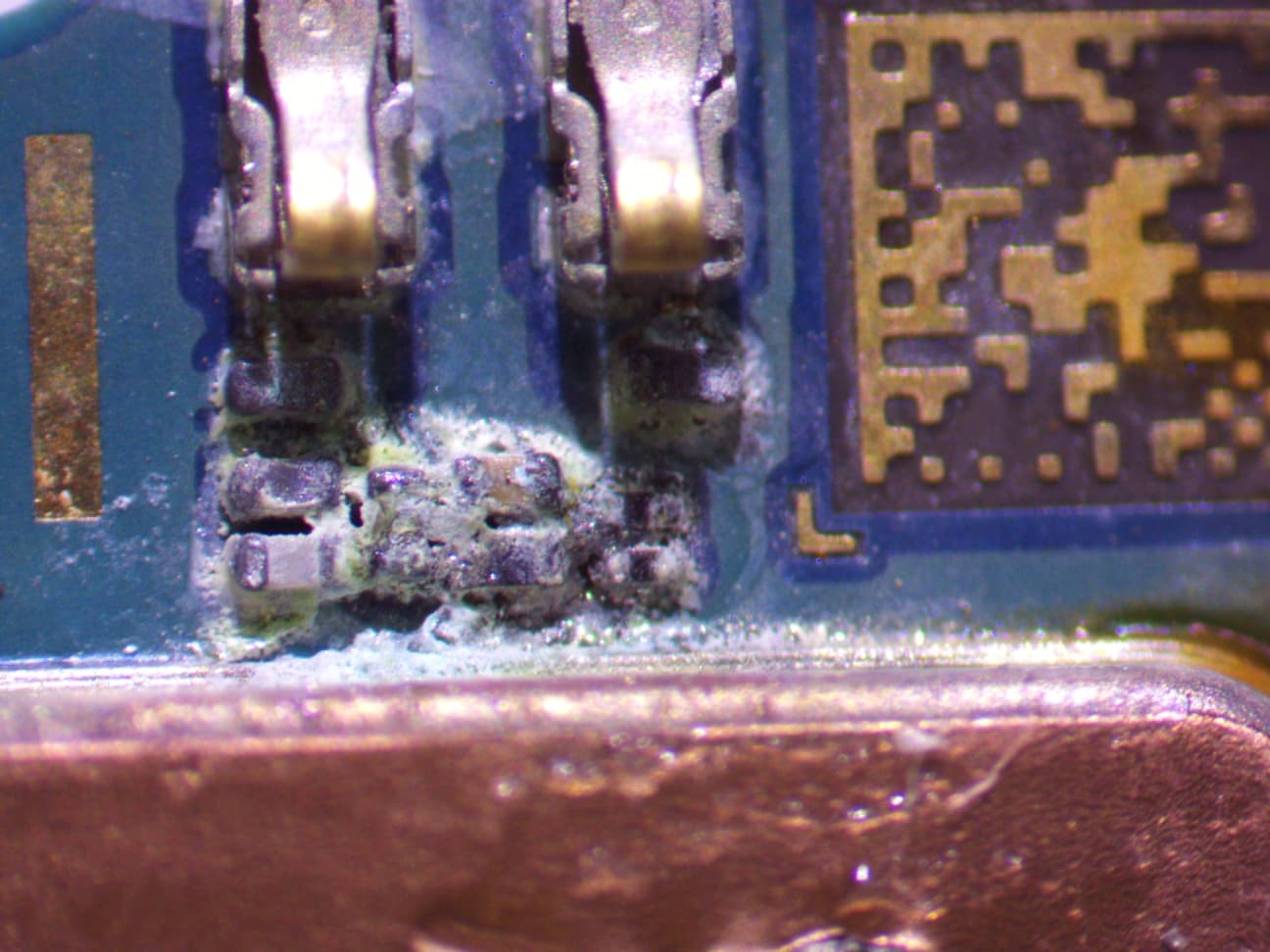
Samsung Galaxy Watch after water: corrosion and a partial board repair
Samsung Galaxy Watch after water: severe board corrosion, multiple chip replacements and partial recovery. Why the heart-rate sensor could not be restored.
White and greenish deposits damaged contacts, traces and electronic components on the board.
A Samsung Galaxy Watch may still power on while corrosion inside is already destroying contacts, traces and integrated circuits. In this case, the microscope revealed severe board damage: white and greenish deposits, oxidised component leads and corrosion across several areas. Restoring the board required replacing multiple chips and many small components, but the watch could not be returned to full working order — the heart-rate sensor still failed its final test. This is a real workshop case, without the promise that every water-damaged device can always be saved.
What the microscope inspection revealed
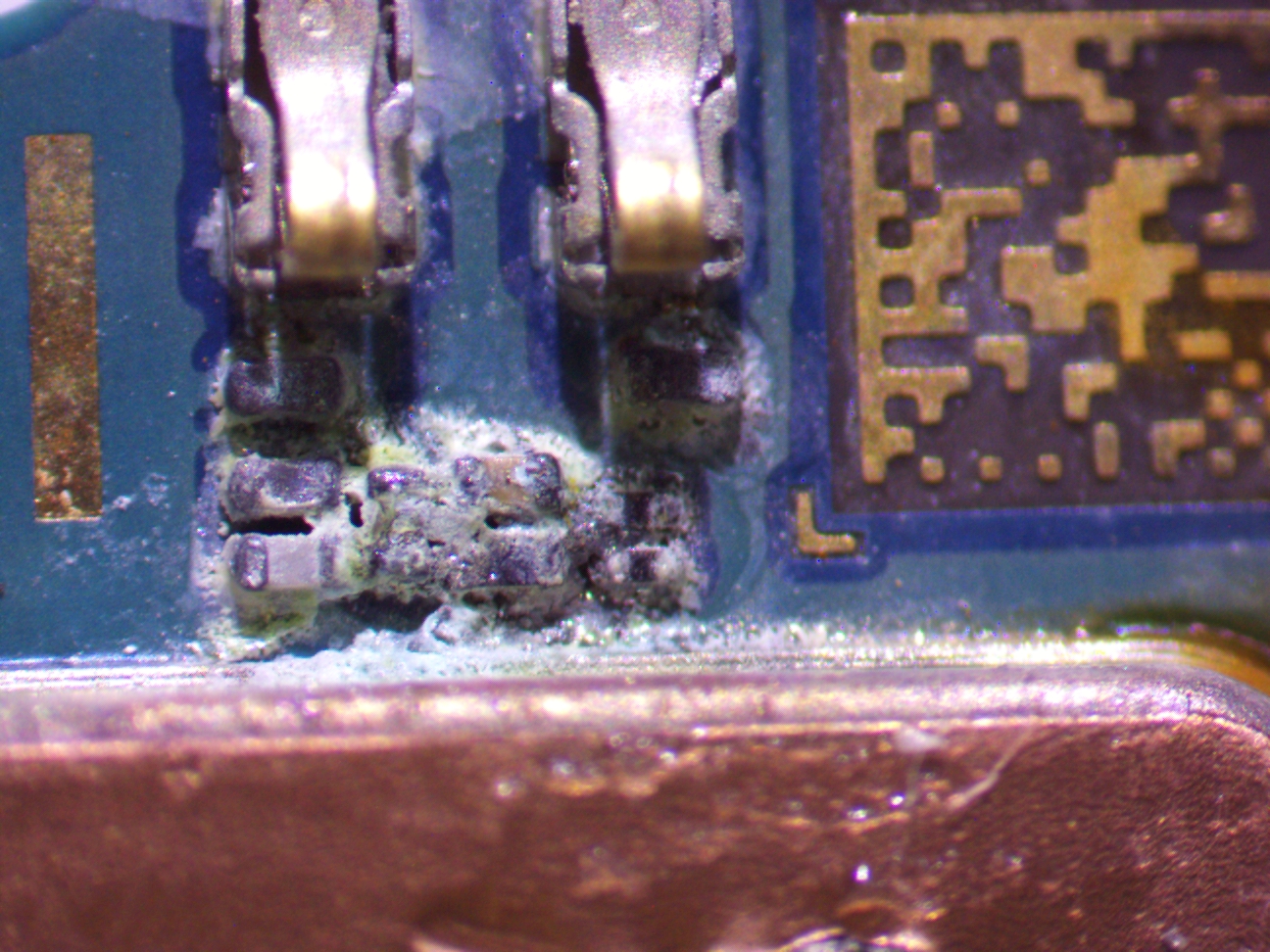
The first image shows how a problem that looks local from the outside can be extensive inside. A dense white residue has formed around contacts and tiny components, several leads have darkened, and the metal itself has started to break down.
Corrosion on a smartwatch board is particularly dangerous for three reasons:
- Extremely small spacing between contacts. Even a thin salt deposit can create leakage current between neighbouring circuits.
- High component density. Power, charging, wireless communication and sensor circuits share a very small area, so damage in one zone can affect several functions.
- Hidden progression. The watch may look dry and may even switch on while oxidation continues underneath chips and protective coatings.
At this stage, wiping the surface is not enough. Every suspect area has to be checked, resistance measurements taken and damage searched for under magnification.
Why damage continues after the water dries
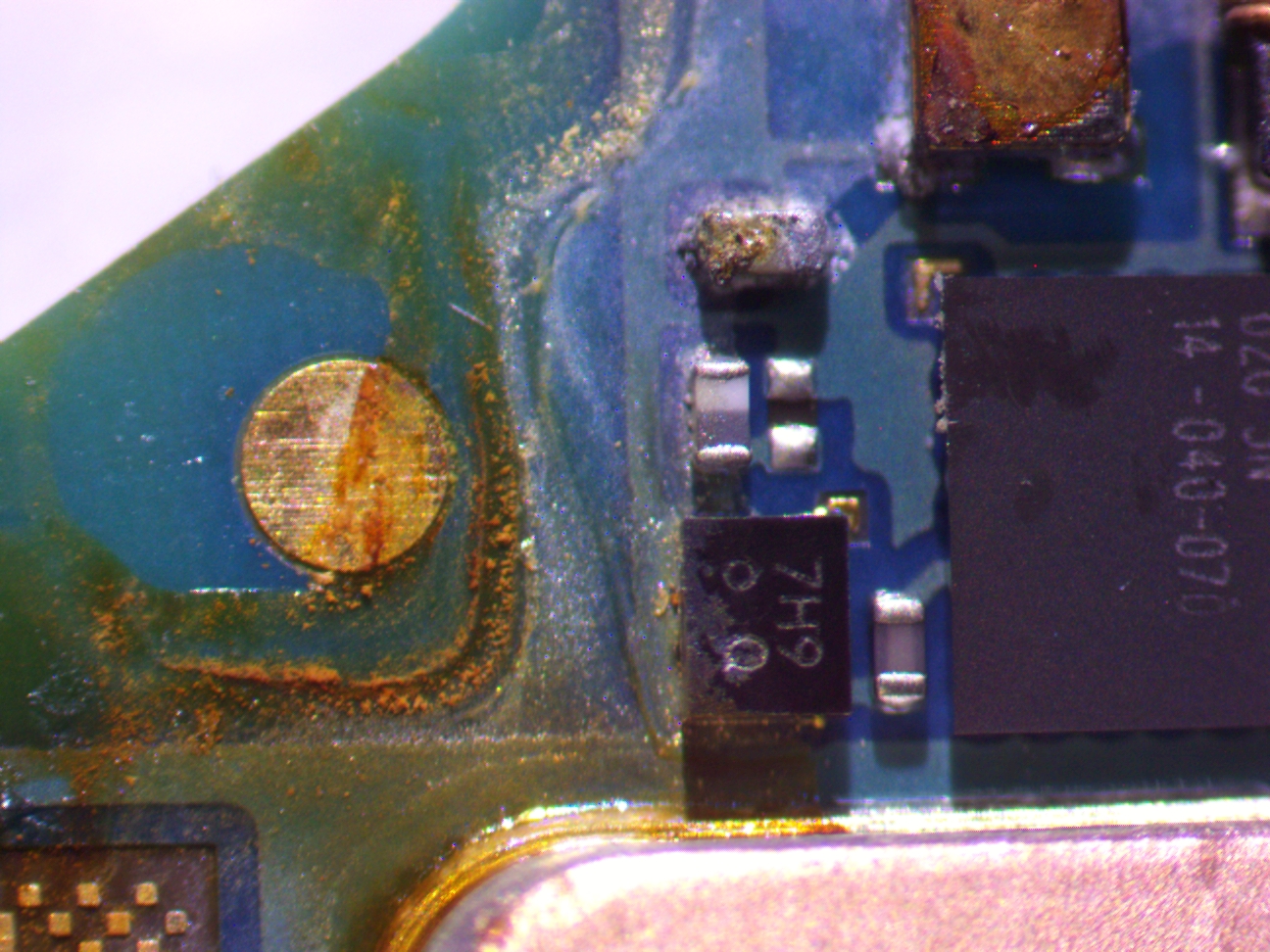
When water evaporates, it leaves salts, minerals, sweat and detergent residue behind. These deposits pull moisture from the air and become weak conductors. If the battery remains connected, the electrochemical reaction accelerates: copper and solder oxidise, contact resistance rises and thin traces gradually disappear.
That is why a watch may work for days or weeks after getting wet, then begin draining quickly, rebooting, losing sensors or refusing to power on. It is not a new random fault; it is the continuation of a process already taking place inside the case.
What the restoration required
Work on a board in this condition is not a single-part replacement. Contamination and corrosion products are removed first, then each damaged area is checked again. In this case the work required us to:
- Fully disassemble the watch and remove the board.
- Clean away salts and loose corrosion deposits.
- Inspect contacts, pads and traces under the microscope.
- Replace several damaged integrated circuits and numerous small components.
- Rebuild broken connections where corrosion had already eaten into the metal.
- Check power rails and core functions after every stage so that one fault was not carried further through the circuit.
This type of repair takes far longer than a modular battery or screen replacement. Each restored section can expose another hidden fault that could not be seen until power was applied and the functions were tested.
Why the heart-rate sensor could not be restored
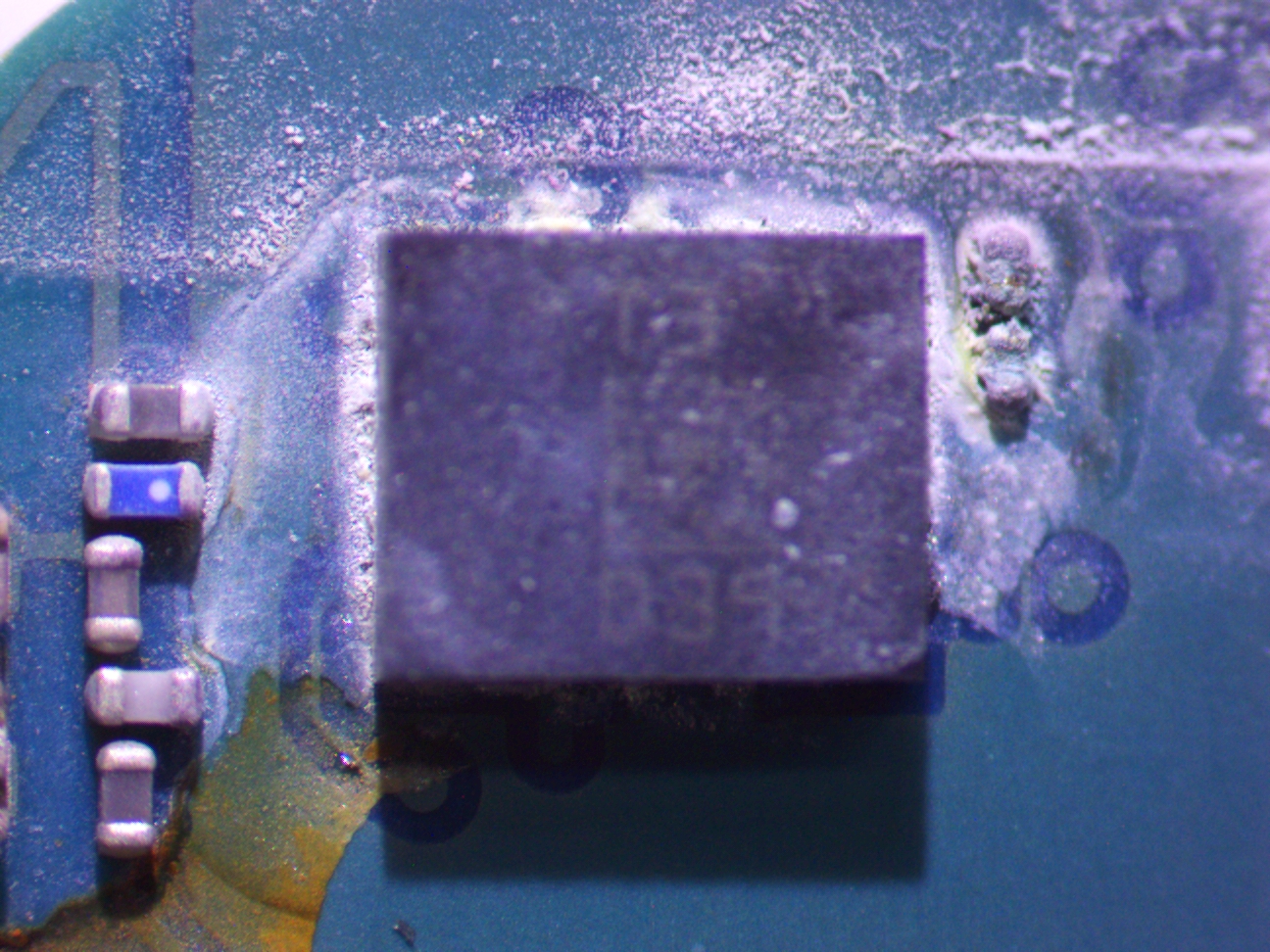
The heart-rate monitor in a Galaxy Watch is not just a single LED on the back cover. It relies on the optical sensor, LEDs, power rails, control lines, communication with the main board and software processing of the signal. Damage to one supply, one signal trace or one hidden contact underneath a chip is enough for the entire subsystem to fail its test.
We replaced many damaged components on this board and achieved a partial recovery, but the heart-rate circuit remained faulty. Continuing to replace components without reliably locating the remaining cause would have meant repairing blindly, increasing the cost without being able to guarantee a stable result.
The final conclusion therefore had to be honest: these watches could not be considered fully functional. Not every complex board repair ends in a complete recovery, especially when corrosion has reached several functional zones and may have entered the inner layers of the PCB.
Because the reported fault was not fully resolved and the heart-rate sensor still did not work, the customer was not charged for the diagnostics, replaced components or the work performed. For us, the result matters more than the number of hours spent on a board: an attempted repair should not be billed as a successfully completed one.
When corrosion repair makes sense
The decision depends on more than whether the watch can power on. A technician has to consider:
- how far the corrosion has spread;
- whether the required chips or a donor board are available;
- whether every critical function can be restored, not just device startup;
- whether the repair will remain reliable after reassembly;
- whether the cost is reasonable compared with a fully working watch.
Good diagnostics should answer not only “can we solder something else”, but also “will this be a dependable device afterwards”. Sometimes the correct decision is to stop and avoid making the customer pay for a further experiment.
What to do if a Samsung Galaxy Watch gets wet
- Turn the watch off if it still responds to controls.
- Do not put it on the charger and do not keep trying to switch it on.
- Do not use a hairdryer or put it in rice: neither removes salts from underneath components.
- Have the watch opened and the board inspected as soon as possible.
The less time the board spends powered while moisture and salts are present, the better the chance that cleaning and a local repair will be enough. After extensive corrosion, even replacing many chips does not always bring every sensor back.
Samsung Galaxy Watch repair in Belgrade
MyService provides smartwatch repair and component-level board repair in Belgrade. We disassemble the watch, inspect the board under a microscope, remove moisture residue and verify the result function by function. If a complete recovery is impossible or no longer economical, we say so honestly before continuing with expensive work.
0 views