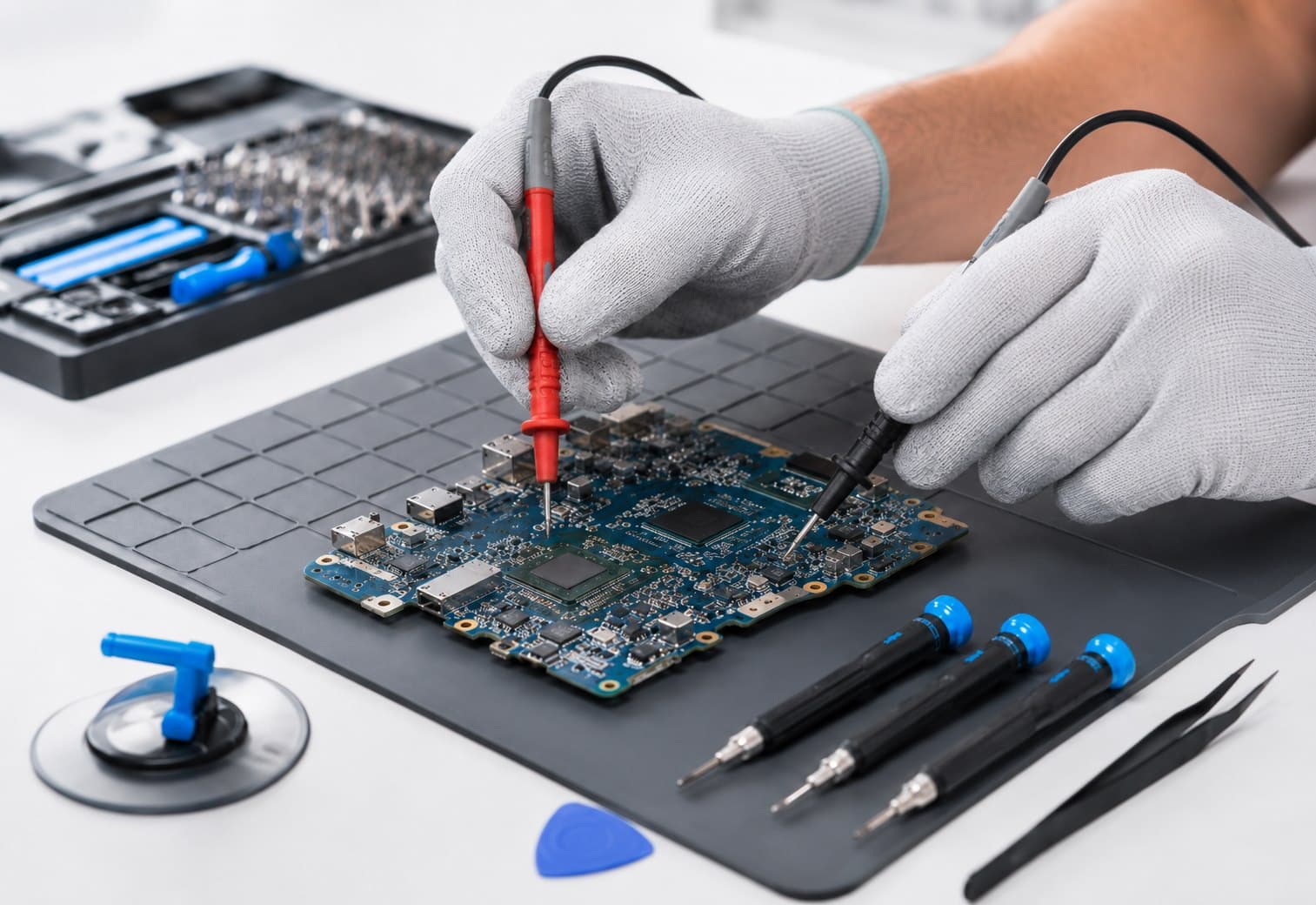
Why the exact repair price often appears only after diagnostics
Why diagnostics matter before the price is agreed, and how that protects both the customer and the repair shop.
The same complaint can hide completely different causes. A phone may fail to charge because of the cable, the port, the battery, the power controller or actual damage on the board. To the customer it sounds like one problem, but from a repair perspective it can mean several very different scenarios.
That is why diagnostics are not there to slow things down. They are there to avoid promising the wrong price and to avoid starting the wrong repair. This matters most when the visible symptom says very little about the depth of the fault.
A good service center checks the device first and only then discusses the scope of work, turnaround time and price. That order may feel less “fast” at the beginning, but in practice it greatly reduces wrong expectations and repeat visits.
For the customer, diagnostics help prevent the situation where one amount was mentioned informally and a completely different repair path appears later. For the service center, diagnostics help avoid working from the wrong assumption and wasting time on an unsuitable fix.
The healthy workflow is simple: accept the device, diagnose it, explain the actual cause and only then move forward after approval. The clearer this stage is, the safer the whole process becomes for everyone involved.
0 views