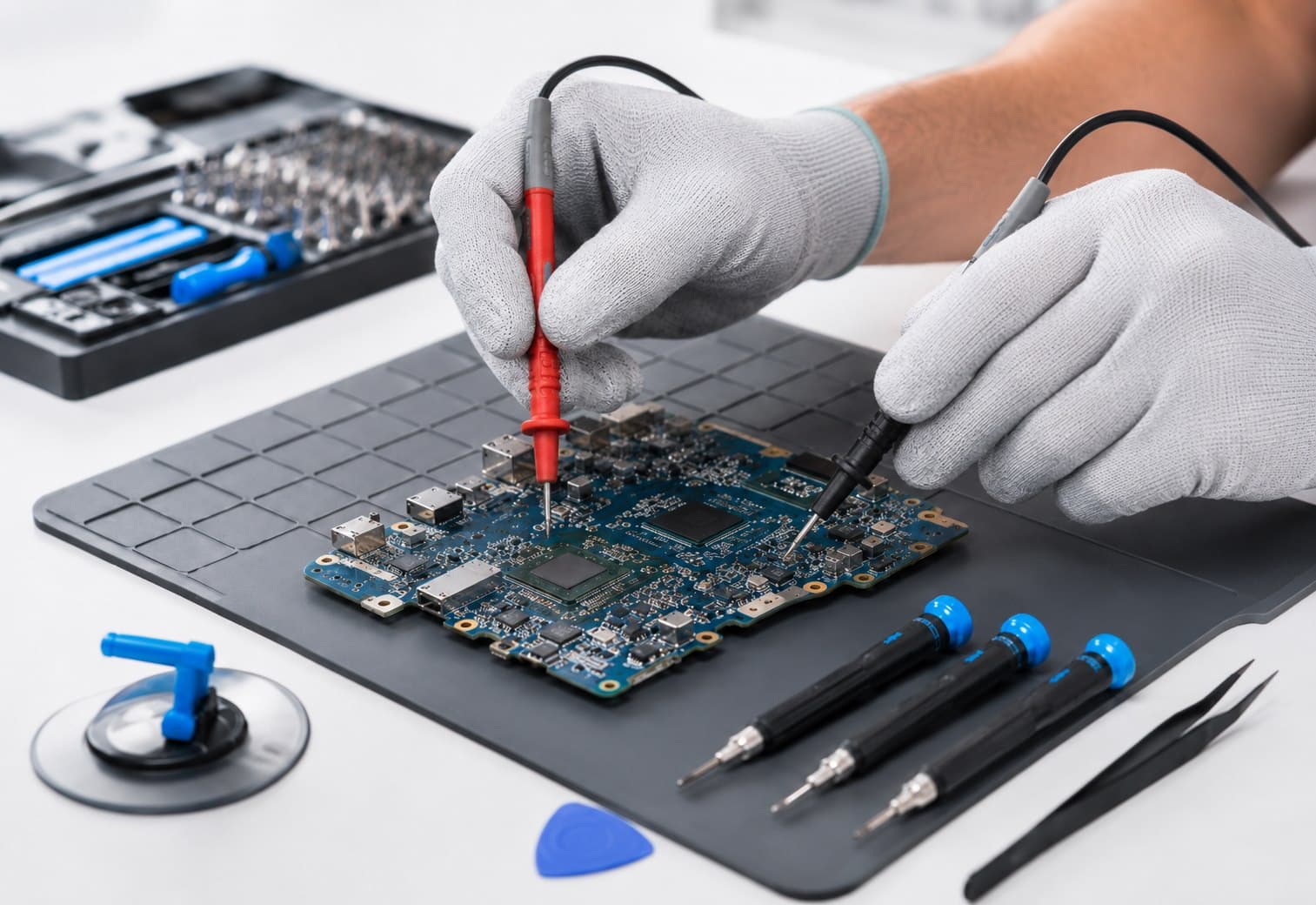
What to do when a device has already been through a bad repair shop
How a repair shop evaluates a device after someone else has already worked on it, and why honest diagnostics matter more than promising a quick fix.
A second visit after a bad repair rarely starts with the original complaint alone. The first step is usually checking what has already been done to the device, what was removed, what was replaced, what is missing and what signs of disassembly are already present inside.
Typical consequences of poor previous work include stripped screws, broken housing clips, missing shields, cheap adhesive, bent flex cables and attempts to “force” a contact instead of replacing the failed part correctly. Sometimes the original fault remains the same, and sometimes new faults are added on top of it.
A separate risk appears when the device starts behaving inconsistently after the first repair attempt: it may boot sometimes, lose signal, charge poorly or run hotter than before. In those cases you cannot simply continue from where the previous technician stopped. The whole check has to be rebuilt around the current condition.
A good service center should not promise a result blindly here. First it needs to determine whether the device is still realistically repairable, whether missing parts can be replaced and whether pads, traces, connectors or mounting points have already been damaged. Sometimes recovery is still reasonable, and sometimes the honest answer is that reliability is no longer guaranteed.
If the device has already been to another repair shop, it helps to say that openly from the start. That saves time for both sides. The more accurate the history of the previous intervention, the easier it is to estimate the real scope of work instead of chasing wrong assumptions.
2 views